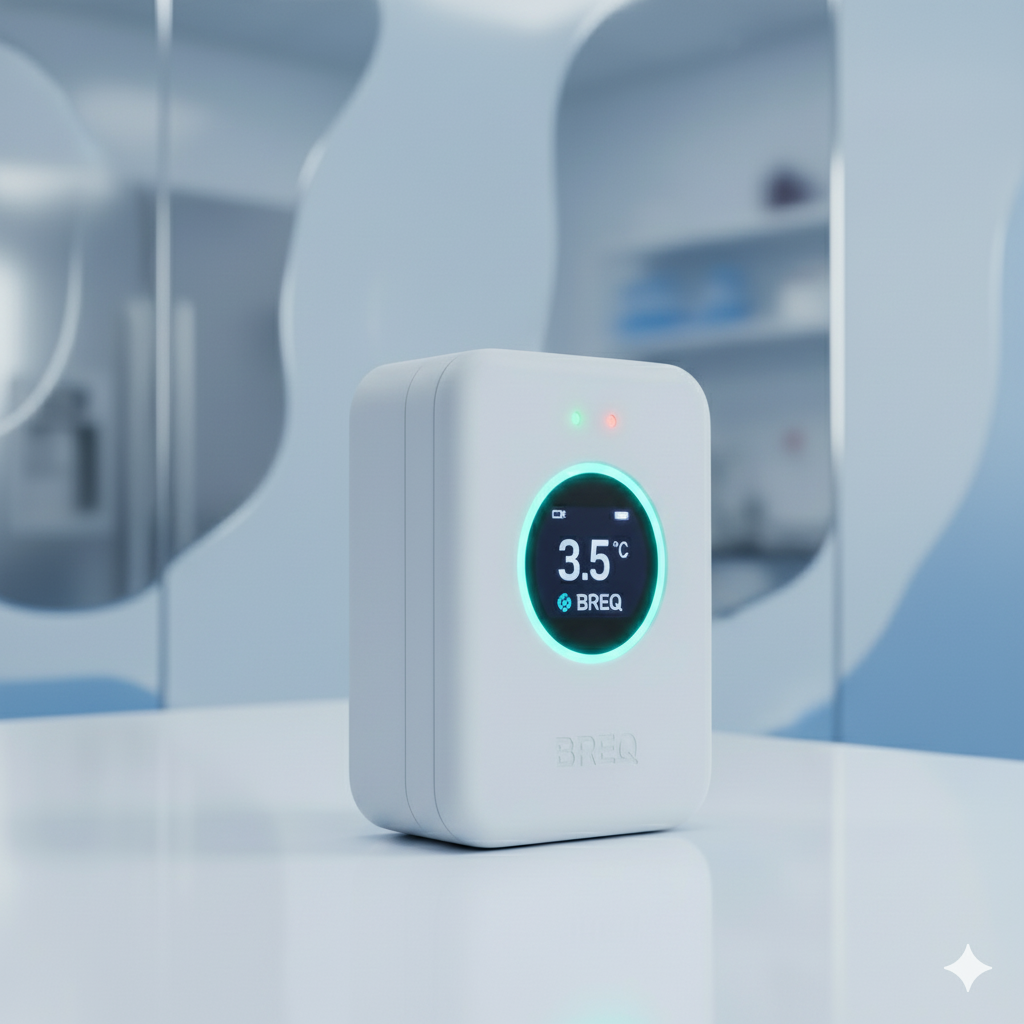
We built a device that attaches to hospital medication fridges and listens to the compressor. When something is going wrong, we know 48 hours before any temperature excursion happens. When a nurse scans a vial at dispensing, we've already checked its entire history. From the factory to that exact moment.
Medicine travels 1,000 miles with perfect telemetry. GPS, satellite, sensors logging every degree. Then it hits the hospital dock and the data chain breaks. A nurse dispenses a vial hours later with no idea what happened to it in transit.
That gap is where patients get hurt. It's also where no one has looked. Until now.
Temperature, humidity, vibration logged every 60s. Full telemetry.
Environmental controls, IoT sensors, auditable logs.
No indoor position. Temperature link broken. History inaccessible.
Nurse scans the vial. No integrity data. No excursion alerts.
Compressor failure predicted in ~44 hours. Risk of 14°C excursion if unaddressed. Maintenance alert sent. Contents flagged for transfer.
Every compressor has a vibration and frequency signature. As it degrades, that signature shifts. Subtly, long before the temperature inside ever changes.
The BREQ device mounts directly onto the fridge. It reads the compressor continuously and flags anomalies as they develop. By the time a temperature excursion would occur, we've already been warning you for two days.
Our hardware picks up micro-vibrations and frequency shifts in the compressor motor. These are invisible to temperature sensors but they're the earliest signal a fridge is in trouble.
The AI models were trained to correlate those vibration patterns with real failure timelines. That gives hospital staff a full 48-hour window to move stock before anything is compromised.
The device doesn't only watch the fridge. It connects to everything upstream: the transit record, the warehouse handoff, every temperature reading since the medicine left the manufacturer.
Once medicine crosses the dock, BREQ takes over from GPS. The device knows where everything is inside the building, and it keeps the temperature record unbroken.
Staff are directed to the exact fridge and shelf. No searching, no wasted time when someone is waiting on a dose.
If a location is empty or the stock there is flagged, the system reroutes to the next verified safe option.
When a nurse scans a vial, BREQ pulls the full history: the transit record, the compressor data, everything that happened in the ward. It takes milliseconds. If anything in that chain went wrong, dispensing is blocked before the medicine reaches the patient.
Nurse scans the barcode or NFC tag at the point of dispensing.
BREQ queries the full record in real time: transit logs, compressor analysis, and everything that happened in the ward.
If there was an excursion anywhere in the chain: dispense blocked, pharmacist notified, batch quarantined. If clean, the nurse proceeds with confidence.
Every existing system monitors temperature and fires an alert after a failure has started. We look upstream, at the mechanical health of the fridge itself, and we stop the problem before it becomes one.
One unbroken record, from the manufacturer to the moment of dispensing.
Traditional monitoring alerts you after a failure has already started. And it stops at the hospital dock.
Logistics and clinical, connected.
GPS tracking, compressor vibration prediction, and a full chain-of-custody record from the manufacturer to the hospital dock.
Indoor tracking, room-level routing, and a safety interlock at the point of dispensing. The part of the chain nobody else has touched.
A device licensed per fridge, with a subscription for the platform. Hospitals keep their existing fridges. We just make them smarter.
The BREQ hardware unit is licensed to hospitals on a per-fridge annual basis. No large upfront cost, no rip-and-replace.
HardwareMonthly per-device fee for the software: AI analytics, alerts, chain-of-custody records, routing, and the safety interlock.
RecurringAPI access for pharmaceutical distributors and logistics operators who want to connect their transit data to what happens inside the hospital.
EnterpriseWe're a small team based in Sønderborg, early but moving fast. We're targeting our first pilot with a hospital in Region Syddanmark, and looking for the investors who want in before this becomes obvious. MedTech, HealthTech, pharma infrastructure. If any of that is your world, we'd genuinely like to hear from you.
Built at


Developed at SDU Startup Station, Sønderborg
Our first target is a pilot in Southern Denmark. If you work at a hospital in Region Syddanmark, are an investor, or want to explore a partnership, we want to hear from you.
SDU Startup Station, Sønderborg, Denmark